Militarizing the Skies the Importance of Reliable Aerospace Machining Services
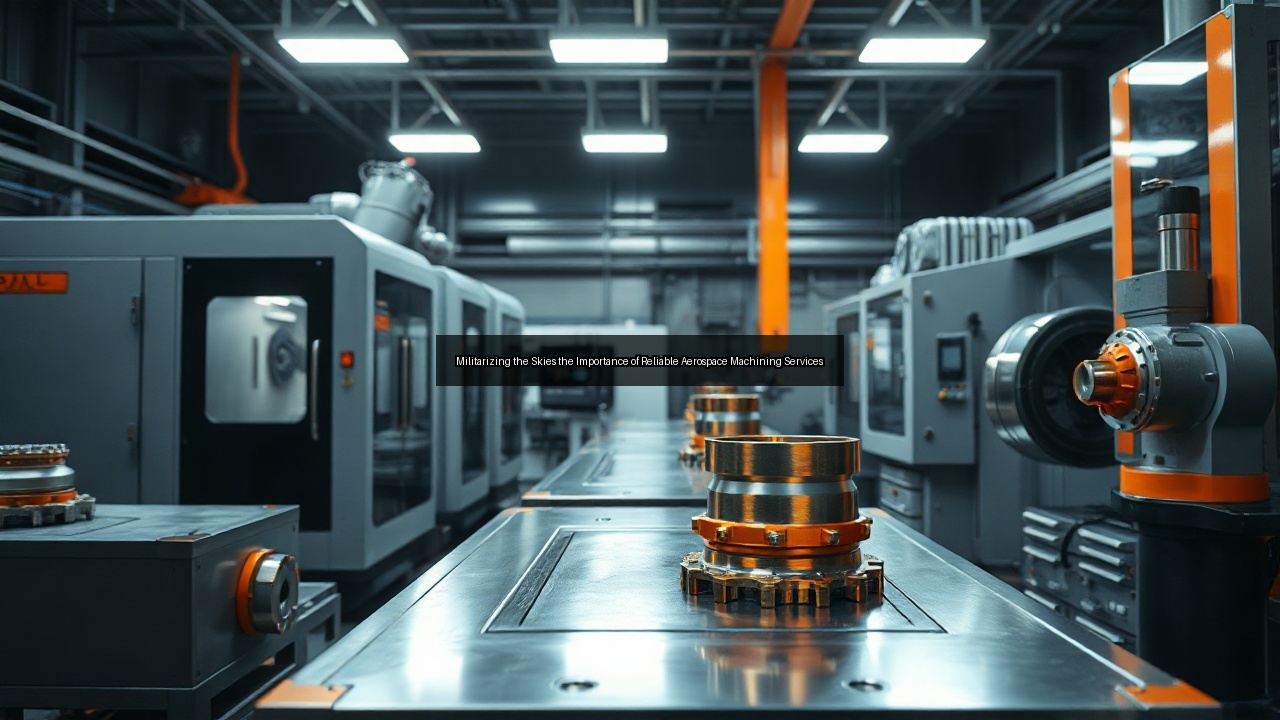
The Role of Aerospace Machining Services in Modern Military Operations
Importance of Precision and Accuracy in Military Aircraft
Precision and accuracy drive every stage of military aircraft production through reliable aerospace machining services. Engineers rely on these services to create components that withstand extreme conditions during combat missions. Machinists shape titanium and aluminum parts with tolerances measured in microns, ensuring aircraft frames, wings, and control surfaces perform without failure. Military aircraft demand parts free from defects that could compromise flight stability or weapon deployment. Aerospace machining services deliver this level of detail by combining advanced tooling with rigorous inspection protocols. The result supports faster deployment of fighter jets and bombers that maintain superiority in contested airspace. Manufacturers integrate cobalt alloys and stainless steel to reinforce high-stress zones, extending service life under intense thermal and mechanical loads.
Machinists: The Backbone of Aerospace Manufacturing
Machinists form the core of aerospace manufacturing when they operate sophisticated equipment to produce mission-critical parts. These skilled professionals translate complex engineering drawings into finished components using milling and turning operations on materials like tool steel and iron. Their expertise ensures that every machined surface meets strict military specifications for fit and function. Aerospace machining services depend on machinists who troubleshoot issues in real time and adjust processes to maintain output quality. They handle everything from initial castings to final polishing, supporting production lines that deliver aircraft and missiles on tight schedules. Without their hands-on knowledge, the aerospace industry would struggle to scale reliable components for defense applications. Training programs continue to emphasize both traditional techniques and digital controls to keep machinists ahead of evolving requirements.
Key Materials Used in Aerospace Machining: Titanium, Aluminum, and Steel
Titanium, aluminum, and steel remain essential in aerospace machining services because they balance strength, weight, and heat resistance. Titanium offers superior corrosion resistance for structural elements in military aircraft exposed to harsh environments. Aluminum provides lightweight properties that improve fuel efficiency and maneuverability without sacrificing durability. Steel and stainless steel variants deliver the toughness needed for landing gear and armor plating. Machinists select tool steel for cutting tools themselves to maintain edge retention during high-volume production. Aerospace machining services also incorporate castings of these metals to reduce waste and speed fabrication of complex shapes. Engineers test combinations with iron and cobalt to optimize performance in engine housings and fasteners. This material strategy supports the creation of reliable parts that meet defense standards across multiple platforms.
Technological Advancements in Aerospace Machining
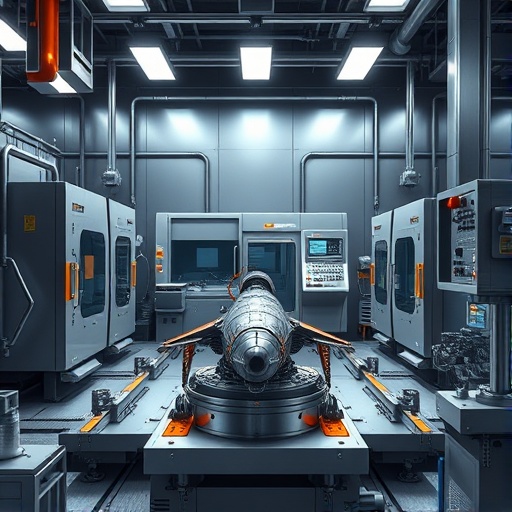
CNC Machining: Revolutionizing Aerospace Component Production
CNC machining transforms aerospace component production by automating precise cuts that manual methods cannot match. Aerospace machining services now use multi-axis CNC systems to create intricate geometries in titanium and aluminum for military applications. These machines reduce human error while increasing repeatability across large batches of aircraft and missile parts. Programmers input detailed specifications that guide cutting paths, allowing rapid iteration during prototype development. CNC machining also supports the integration of sensors that monitor tool wear and surface finish in real time. Manufacturers achieve tighter tolerances on engine components and structural brackets, directly enhancing vehicle performance and safety margins. The technology scales efficiently to meet surging demand for UAV airframes and spacecraft modules.
Industrial Automation in Aerospace Manufacturing
Industrial automation elevates aerospace manufacturing by linking robotic arms, conveyors, and inspection stations into seamless workflows. Aerospace machining services benefit from automated loading of castings onto CNC mills, which cuts cycle times and reduces operator fatigue. Robots handle heavy stainless steel and tool steel pieces during milling operations, maintaining consistency even on extended shifts. Automation software tracks production metrics and flags deviations before defects reach final assembly. This approach strengthens reliability across military aircraft production lines and supports higher output of critical engine parts. Facilities that adopt these systems report fewer rejected components and improved traceability for defense audits. The result accelerates delivery of machined parts that meet the rigorous demands of modern warfare.
The Future of Aerospace Machining: Integration with Semiconductors
Integration with semiconductors opens new capabilities for aerospace machining services by embedding smart sensors directly into machined components. Engineers embed microchips into titanium housings and aluminum frames to enable real-time health monitoring of military aircraft and UAV systems. CNC machining now incorporates precision pockets and channels that protect these delicate electronics from vibration and temperature extremes. Aerospace machining services combine traditional metal removal with semiconductor packaging techniques to produce hybrid parts for advanced avionics. This fusion improves fault detection in turbine blades and engine assemblies before issues escalate. Manufacturers explore cobalt and steel substrates that interface cleanly with silicon-based devices. The trend points toward self-diagnosing spacecraft and missiles that maintain peak performance throughout extended missions.
Applications of Aerospace Machining in UAV and Spacecraft Development
Machining for Unmanned Aerial Vehicles (UAV)
Machining for unmanned aerial vehicles requires aerospace machining services that produce lightweight yet robust airframes from aluminum and composites. Machinists mill precise mounting points for cameras, sensors, and weapons systems that UAVs carry into contested zones. CNC machining creates internal channels for wiring and cooling that keep electronics operational during long-endurance flights. Aerospace machining services also fabricate propeller hubs and landing gear from titanium to resist fatigue under repeated takeoffs and landings. Military operators depend on these custom parts to maintain fleet readiness and mission flexibility. The process emphasizes tight tolerances on control surfaces to ensure stable flight characteristics even in turbulent conditions. Continued refinement of milling strategies supports rapid upgrades as UAV roles expand in reconnaissance and strike operations.
Custom Aerospace Machining for Space Architecture
Custom aerospace machining supports space architecture by delivering specialized brackets, panels, and connectors machined from high-performance alloys. Aerospace machining services adapt CNC programs to handle the unique thermal expansion properties of titanium and stainless steel used in orbital habitats. Machinists produce sealed interfaces that maintain pressure integrity for crew modules and propulsion units. These components undergo extensive testing to survive launch vibrations and the vacuum of space. Engineers rely on precision aerospace machining techniques to integrate iron and cobalt elements that shield sensitive instruments from radiation. The work directly enables modular space stations and satellite constellations that serve both commercial and defense objectives. Reliability in every machined detail prevents costly failures during critical missions beyond Earth orbit.
Critical Components: Turbine Blades and Engine Parts
Turbine blades and engine parts represent the pinnacle of aerospace machining services because they operate under extreme temperatures and rotational stresses. Machinists use five-axis milling to sculpt complex cooling passages into nickel-based superalloys and titanium. Aerospace machining services maintain strict surface finish requirements that prevent crack initiation in high-pressure turbine sections. CNC machining also fabricates compressor disks and shafts from tool steel and aluminum to balance weight against strength. Military aircraft engines depend on these precision parts to deliver thrust on demand during supersonic dashes or prolonged loiter. Quality checks at every stage verify dimensional accuracy and material integrity before engines reach final assembly. The resulting powerplants power the next generation of fighters, bombers, and UAVs with unmatched dependability.
Challenges and Solutions in Aerospace Machining
Ensuring Reliability in Aerospace Machining Services
Ensuring reliability in aerospace machining services demands layered verification processes that catch flaws before parts enter service. Machinists document every setup and tool change to create traceable records for military certification. Aerospace machining services employ coordinate measuring machines and laser scanners to confirm that tolerances on aluminum and steel components remain within specification. Regular calibration of CNC equipment prevents drift that could compromise aircraft safety. Manufacturers also conduct destructive testing on sample castings to validate material properties under simulated flight loads. This disciplined approach reduces in-flight failures and supports rapid scaling of production for defense contracts. Continuous improvement cycles refine techniques based on field data from returned components.
Overcoming Material Challenges: Castings and Tool Steel
Overcoming material challenges requires aerospace machining services to adapt strategies for difficult-to-machine castings and hardened tool steel. Machinists apply specialized coatings and optimized feeds to prevent tool breakage when cutting cobalt-rich alloys or high-strength iron. Aerospace machining services preheat certain castings to reduce internal stresses that cause warping during milling. They also select appropriate cutting fluids that extend tool life while preserving surface integrity on stainless steel parts. Engineers develop custom fixtures that secure irregular shapes without distortion, enabling accurate feature placement. These solutions maintain throughput even when working with exotic blends that offer superior performance in engine and missile applications. The expertise keeps production schedules on track despite the inherent toughness of aerospace-grade metals.
Maintaining Standards: Precision Aerospace Machining Techniques
Maintaining standards calls for precision aerospace machining techniques that consistently meet or exceed military specifications. Aerospace machining services implement statistical process control to monitor variations across batches of machined aircraft and spacecraft parts. Machinists fine-tune spindle speeds and depths of cut to achieve mirror finishes on turbine blades that reduce drag and improve efficiency. Regular audits verify that CNC programs and tooling selections align with evolving requirements for UAV and missile systems. Training emphasizes both the science of material removal and the art of anticipating how aluminum or titanium will respond under different conditions. This commitment to excellence ensures every delivered component contributes to overall platform reliability and mission success.
The Future of Aerospace Machining Services
Emerging Trends in Aerospace Manufacturing
Emerging trends in aerospace manufacturing point toward greater adoption of hybrid processes that combine additive and subtractive methods within aerospace machining services. Machinists now finish 3D-printed titanium structures with precision milling to achieve final tolerances required for military aircraft. CNC machining centers equipped with in-process metrology reduce setup times and scrap rates. Aerospace machining services explore new tool geometries that handle next-generation alloys containing higher percentages of cobalt and iron. Digital twins of machining operations allow virtual optimization before any metal is cut. These advances accelerate development cycles for UAVs, missiles, and spacecraft while preserving the high reliability defense customers expect. The industry continues to invest in workforce development to match these technological shifts.
Impact of Military Needs on Aerospace Machining Innovations
Military needs accelerate aerospace machining innovations by prioritizing speed, weight reduction, and survivability in every new component. Aerospace machining services respond with faster CNC cycles that produce missile airframes from lightweight aluminum and steel combinations. Machinists develop techniques to machine thinner titanium sections without compromising strength for next-generation fighter aircraft. Industrial automation integrates with real-time data analytics to predict maintenance needs on production equipment. These pressures also drive research into sustainable coolants and recyclable tooling that lower the environmental footprint of high-volume manufacturing. The defense sector's demand for hypersonic and directed-energy platforms further pushes the boundaries of what precision aerospace machining can achieve on exotic materials.
Sustainability in Aerospace Machining: A Look Ahead
Sustainability in aerospace machining gains traction as manufacturers seek to reduce waste and energy consumption without sacrificing performance. Aerospace machining services adopt dry machining strategies where possible and recycle aluminum and titanium chips back into the supply chain. Machinists optimize tool paths in CNC programs to minimize material removal and extend the life of cutting inserts made from tool steel. Aerospace machining services also explore bio-based fluids that maintain cooling performance while easing disposal requirements. These practices align with broader military goals for reduced logistics footprints during deployment. Continued refinement supports long-term viability of the aerospace industry while delivering the reliable parts that modern defense operations require.
See Also
- Innovative Machining Solutions for Aerospace Castings and Custom Parts
- The Art and Science of Machining Turbine Blades for Military Aircraft
- Exploring Space Architecture through Advanced Aerospace Machining Techniques
- From Titanium to Aluminum the Best Materials for Aerospace Machining
- The Role of CNC Machining in Shaping the Future of Aerospace Engineering